

Build a depth chart at work.
Because not everybody can be a starter.

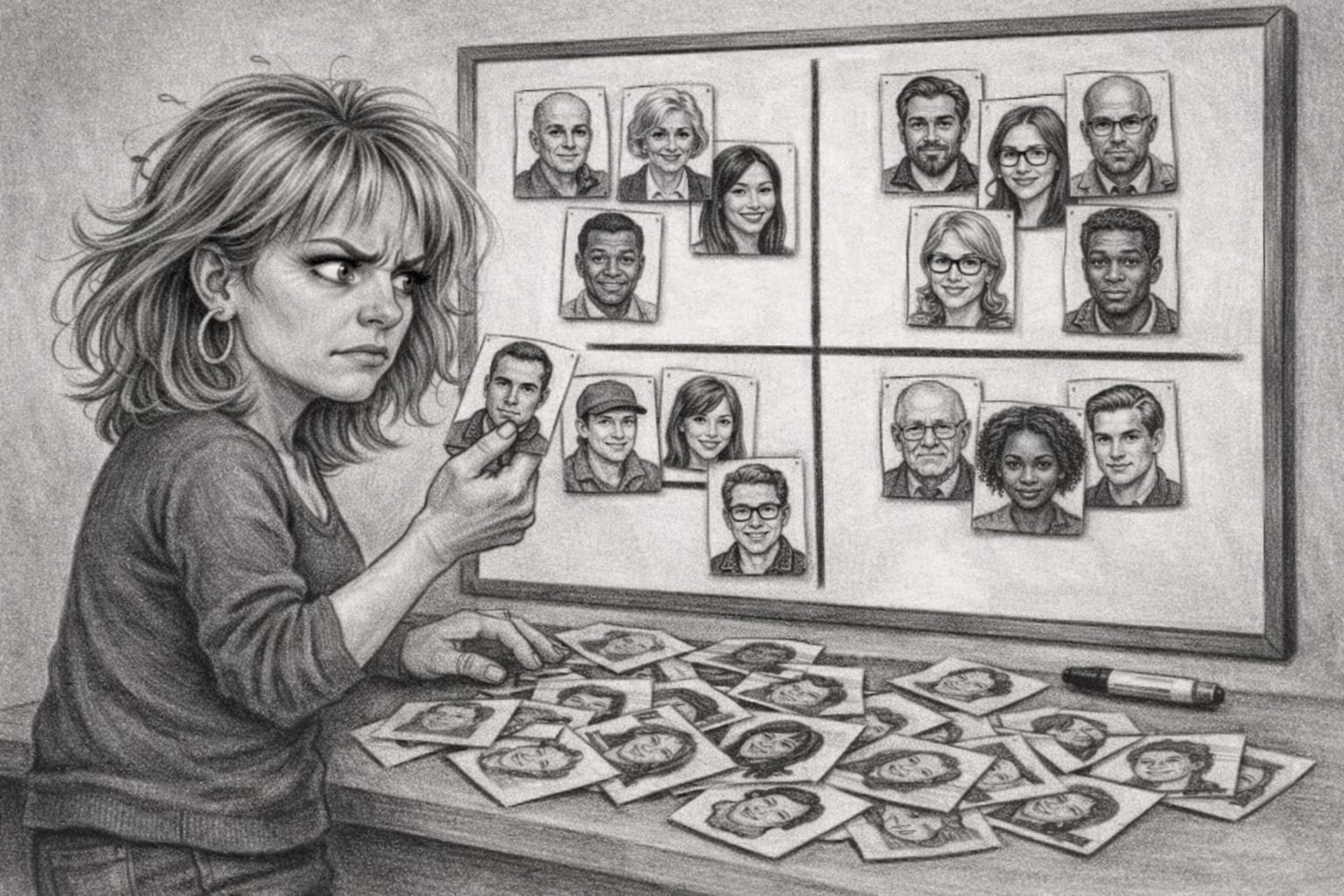
I was two weeks into my new role - and still trying to close out the old one.
I couldn’t stay on top of my in box, and my calendar was giving me hives. More invitations arrived every day - from people wanting intros, wanting context, wanting coffee, wanting something - and I couldn’t keep up.
One day, after a full day of back-to-back meetings where I got nothing done, I knew I had to get it under control. I had to decide: who do I need to meet with most urgently, and who can wait?
I made my decisions based on two criteria:
How much influence does this person have over my team’s success?
How much insight or intel can they actually give me?
I know. It sounds cold. Wanting to meet with only the people who could be useful to me in the moment. It smacked of being a user.
But it was either that or continue spending my days resenting the hell out of everybody on my schedule.
I drew up a grid to help me sort them all out. And I used a sports theme since it happened to be NFL draft season:
MVPs - (High Influence / High Insight) These were my high-value targets - people I’d need to invest time in - my manager, the finance person with definite opinions on my budget, and each direct report.
Scouts - (Low Influence / High Insight) This was an evolving list. These were the invaluable people I uncovered over time. They were a wellspring of institutional knowledge, and keepers of the insider info that mattered. The VP’s admin topped this list - she was the gatekeeper, and if she liked you, she’d manage the calendar in your favor. She was also a hoot.
Front Office - (High Influence / Low Insight) These were the people I wouldn’t be interacting with on the daily, but they were the ones who made decisions on org design, influenced who got promoted, and allocated resources. Such as the VP - who I think met with me mainly to talk football. Whatever works.
Bench Players - (Low Influence / Low Insight) These were people I needed to keep on my radar - but I didn’t need to meet with them right away. A lot of these were the randos who kept popping up with “let’s have coffee!” in my DMs.
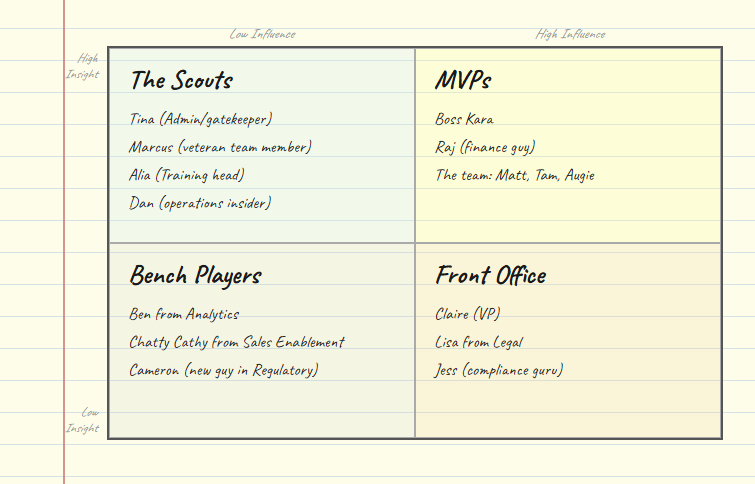
The grid changed as I got acclimated in my new role. When my boss kept name-dropping Ben from Analytics, I moved him from Bench Player to MVP. He was the Kurt Warner of data.
I revisited my grid every few weeks, or when key events happened: someone leaving, someone onboarding, a reorg.
As time went on, I found that a few of the folks on the bottom of my grid had become some of my most important allies.
When all was chaos, I had to devise a system for something that, in a perfect world, would be second nature. But it was useful enough to become a living, ever-evolving tool I use to this day.
Once you decide who you need to meet with - make the meeting worthwhile. The Good Question Handbook gives you a list of non-boring questions you can ask to make it interesting. You can find it - and a few other handy tools - here.